Starting position and movement
Players commonly begin with all fifteen checkers grouped at their starting point and move them around the board in the same direction. The objective is to bring the full set into the home board and bear it off first.
Each die is a separate move. A double normally gives four moves of the rolled value, provided every intermediate point is legal.
Backgammon Quest promotes fair competition, strategy, discipline and respect for players.
Occupied points and blocking
A checker cannot land on a point occupied by an opposing checker. Building consecutive occupied points slows the opponent, but some rule sets limit a complete six-point block.
Because long backgammon has regional variants, confirm the blocking rule used by the specific match before joining.
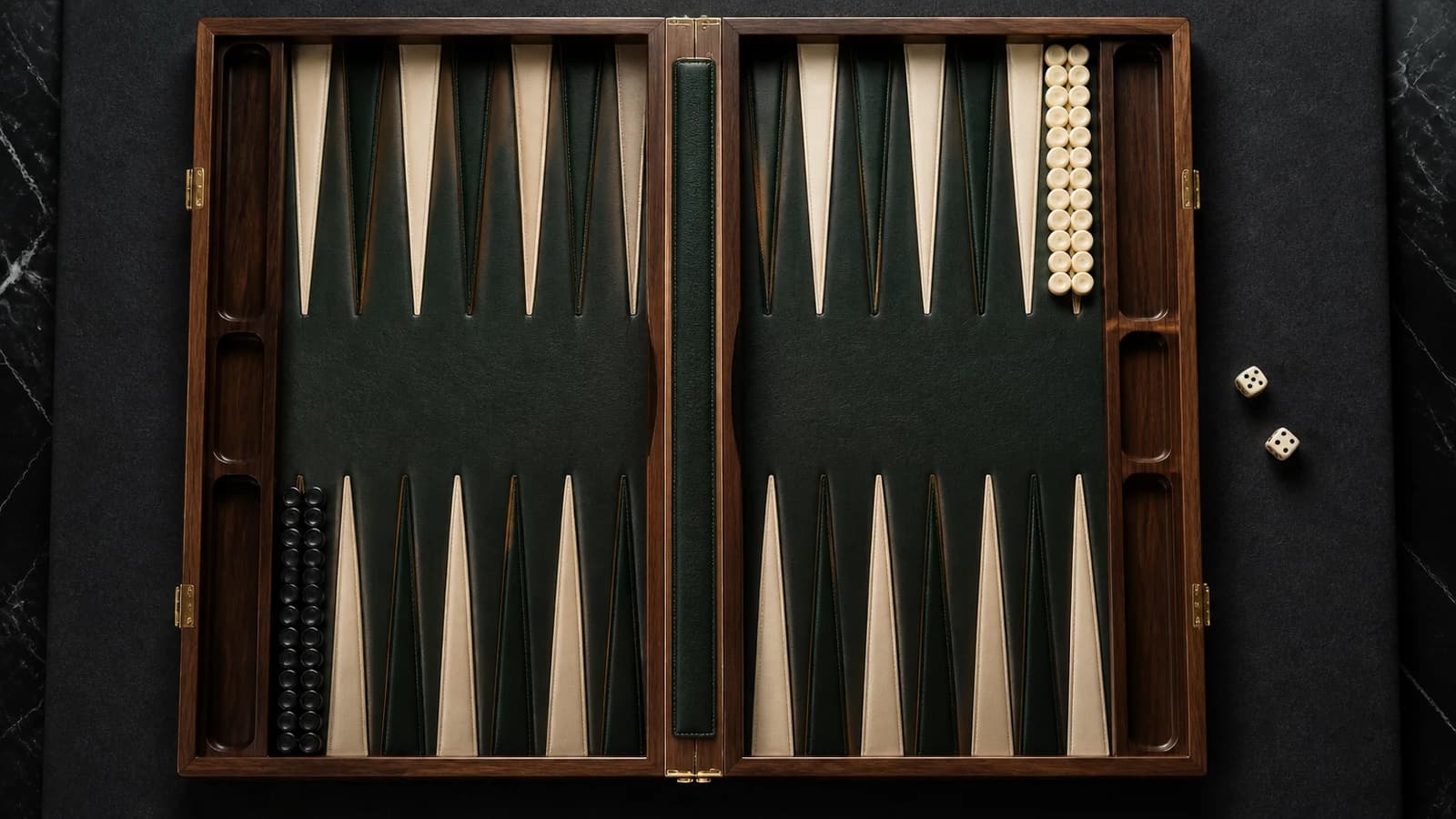
Entering the home board and bearing off
Once every checker has reached the home board, bearing off begins. Exact rolls remove checkers from matching points; higher rolls are used according to the selected rule set.
Good play balances speed with useful blocks. The live platform remains the source for the exact rules of each offered format.
Questions and answers
Are checkers hit in long backgammon?
In the common long version, checkers are not hit; an opposing occupied point is closed.
Can long backgammon rules vary?
Yes. Blocking and starting rules may differ by region or platform.
When does bearing off begin?
After all fifteen checkers have entered the home board.
Choose a long backgammon match
Continue to Backgammon Quest and review the rules attached to the available long backgammon format.
View available games